
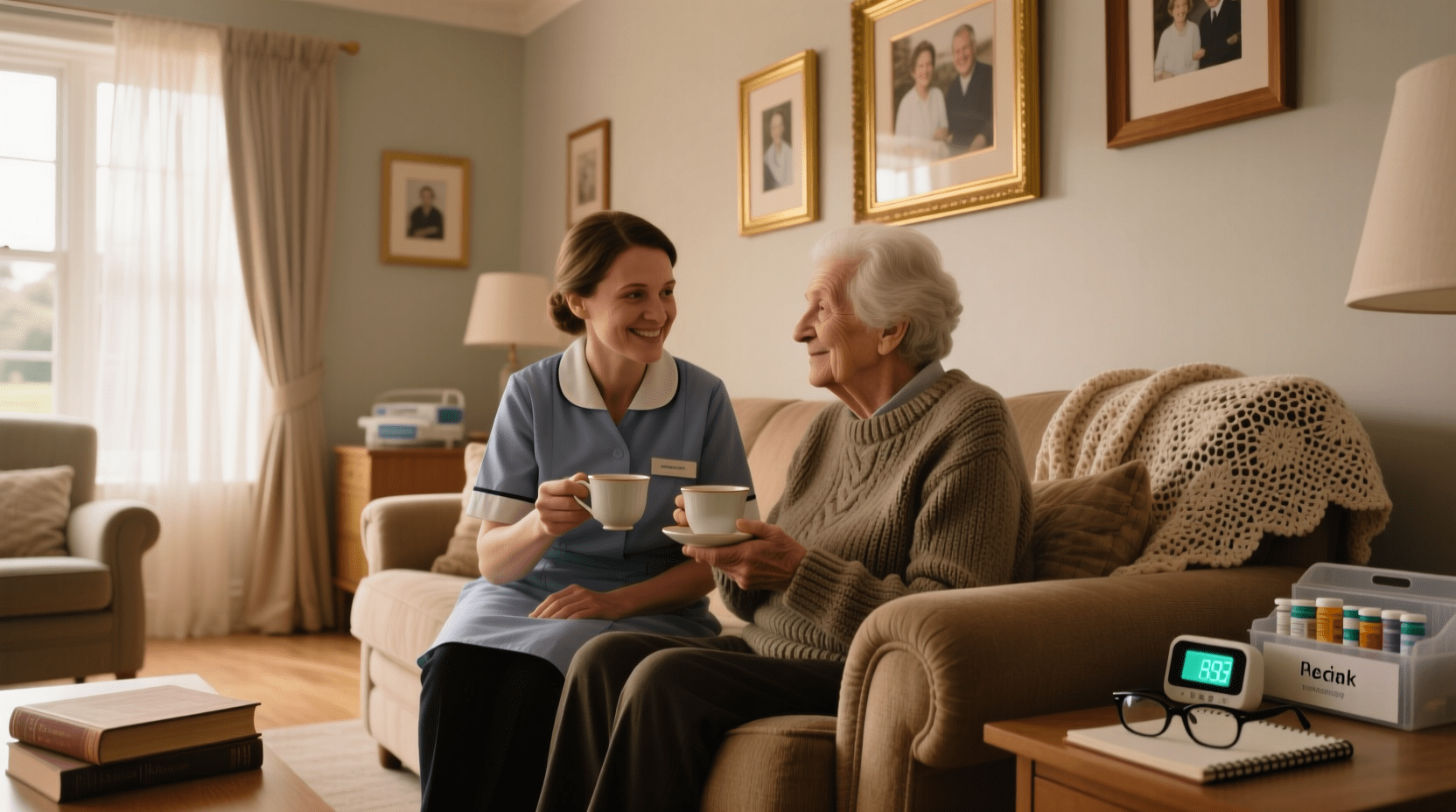
Live-in care provides one-to-one, personalised support in the comfort of home, offering greater independence, emotional wellbeing, and quality of life than residential care – especially for individuals with dementia or higher support needs. Residential care can suit those requiring complex nursing, but for most people, staying at home with a dedicated live-in carer delivers a safer, more comfortable, and more dignified life.
MidlandLyfe offers professional, UK-wide live-in care designed to help people live well at home instead of moving into a facility.
Choosing between live-in care and a residential care home is one of the biggest decisions families face – especially when safety, independence, and wellbeing are at stake. Both options offer support, but they deliver very different experiences. Understanding those differences can help you choose the option that gives your loved one the best possible quality of life.
At MidlandLyfe Care, we support individuals across the UK with professional live-in care designed to help them remain safe, comfortable, and independent at home – without the disruption of moving into a facility.
What Is Live-In Care?
Live-in care means a trained carer moves into the individual’s home to provide round-the-clock support, personalised to their daily needs.
It’s a one-to-one service where the person receives focused attention and continuity every day.
Common support includes:
- Personal care (washing, dressing, toileting)
- Medication support
- Meal preparation & hydration management
- Dementia and cognitive support
- Mobility assistance
- Domestic tasks and household upkeep
- Companionship, reassurance, and emotional support
- Overnight safety monitoring
Live-in care is ideal for anyone who wants to stay in the comfort of their own home, even with higher care needs.
What Is Residential Care?
Residential care homes provide accommodation, staff supervision, and shared care for multiple residents. Support is available, but it is shared between everyone in the home.
Routine and schedules are standardised, and residents often adapt to the home’s structure rather than the other way around.
Quality of Life: How Do the Two Options Compare?
1. Independence and Familiarity
Live-In Care:
✔️ The person stays in their own home
✔️ Keeps their routine, surroundings, and personal freedom
✔️ Maintains community ties – neighbours, GP, church, family
Residential Care:
✘ Requires relocating
✘ Shared environment, less control over daily routine
✘ Can be overwhelming or distressing for some individuals
Winner: Live-in care prioritises autonomy and comfort.
2. Personalised Support
Live-In Care:
✔️ One-to-one attention
✔️ Care built around individual preferences
✔️ Carer fully understands the person’s health, personality, and habits
Residential Care:
✘ Staff support multiple residents
✘ Less individual time available
✘ Schedules often set by the home
Winner: Live-in care offers unmatched personalisation.
3. Emotional Wellbeing & Companionship
Live-In Care:
✔️ A consistent carer builds trust and emotional connection
✔️ Reduced feelings of loneliness
✔️ Support tailored for anxiety, dementia, or confidence issues
Residential Care:
✘ Staff change frequently
✘ Limited one-to-one time
✘ Environment may feel unfamiliar or institutional
Winner: Live-in care provides deeper emotional stability.
4. Safety & Dementia Support
Live-In Care:
✔️ Constant observation ensures timely intervention
✔️ Familiar surroundings reduce confusion
✔️ Technology such as gentle reminders, video check-ins and safety sensors enhance support
Residential Care:
✘ Staffing ratios vary
✘ Falls or night-time wandering may not be seen immediately
Winner: Live-in care is often safer for people with dementia.
5. Quality of Life
Live-In Care:
✔️ Privacy
✔️ Freedom to eat preferred foods
✔️ Personal routines maintained
✔️ Stay close to family and community
✔️ Pets can remain at home
✔️ A stronger sense of dignity
Residential Care:
✘ Structured routines
✘ Less privacy
✘ Can feel unfamiliar, noisy, or restrictive
Winner: Home truly wins – it’s where people feel most themselves.
When Is Residential Care the Better Option?
To stay balanced and honest:
Residential care can be better for people who require specialist, medical, or nursing support 24/7 that cannot reasonably be managed at home.
However, for most individuals with personal care, mobility issues, dementia, or general day-to-day support needs, live-in care offers superior comfort, wellbeing, and independence.
Why Families Choose MidlandLyfe for Live-In Care
- Carers and support workers with real frontline experience
- DBS-checked and fully trained professionals
- Technology-enhanced support for dementia and safety
- Personalised one-to-one care
- UK-wide coverage
- Independence-focused, dignity-first approach
- Consistency and companionship you can rely on
Thinking About Live-In Care? We’re Here to Help.
Whether you’re exploring options for yourself or a loved one, we can guide you through what live-in care looks like, how it works, and what support we can provide.
👉 Get in touch today to speak with our friendly team and discuss your needs.