
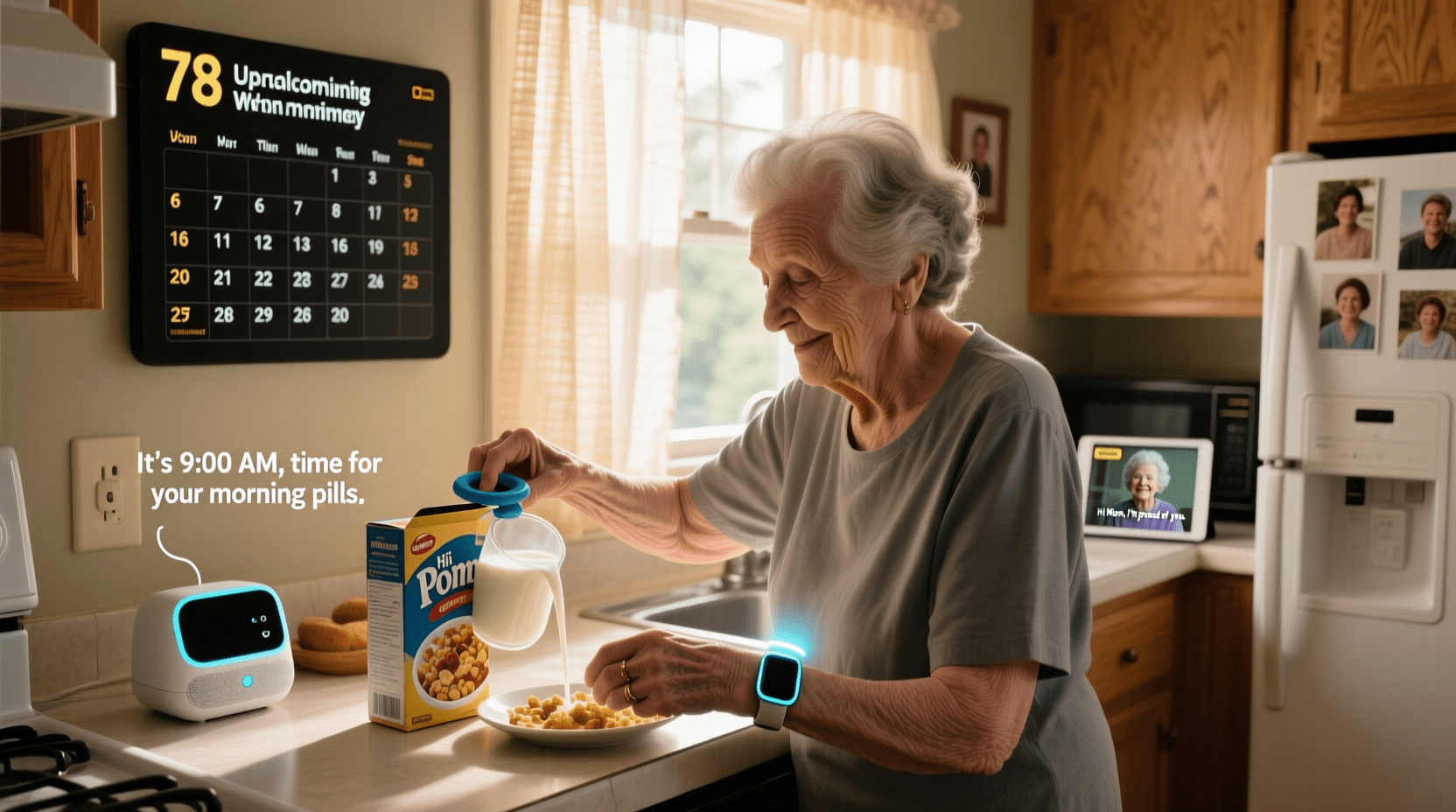
Modern safety devices, such as fall-detection alarms, smart home sensors, medication dispensers, GPS trackers, and smart watches – make it much safer for seniors to live independently at home. These tools help prevent accidents, monitor routines, and alert families early when something is wrong. The right mix of technology and human support offers the safest, most dignified alternative to residential care.
Living alone can be empowering for older adults — but families naturally worry. Thankfully, modern technology has created a new generation of safety devices designed specifically to protect seniors, prevent accidents, and alert loved ones early when something is wrong.
In this 2025 guide, we break down the most effective safety devices, how they work, and which ones truly make a difference in day-to-day life.
1. Personal Emergency Response Systems (PERS)
Best for: Falls, sudden illness, mobility issues
These wearable devices allow seniors to call for help immediately at the press of a button. Modern systems now include:
- GPS tracking so families know the user’s location
- Automatic fall detection (no button needed)
- Two-way communication with emergency teams
- Waterproof pendants for shower safety
Why it matters: Falls are the leading cause of injury in older adults. A PERS device can be the difference between a quick rescue and hours of waiting.
2. Smart Home Sensors
Best for: Early risk detection and monitoring routines
Sensors can be placed around the home to track daily activity such as:
- Bed sensors (checking sleep patterns or long periods of inactivity)
- Door sensors (useful for dementia-related wandering)
- Motion sensors (notifying carers if no movement is detected)
- Kitchen sensors (detecting stove use or unusual behaviour)
Why it matters: These systems provide discreet oversight without invading privacy.
3. Automatic Medication Dispensers
Best for: Memory loss, dementia, complex medication schedules
A dispenser can remind the user when it’s time to take medication and release the correct dose. Many models notify family or carers if a dose is missed.
Why it matters: Medication mistakes are one of the most common reasons older adults are hospitalised.
4. Smart Doorbells & Security Cameras
Best for: Security, doorstep safety, peace of mind
Video doorbells give seniors the ability to:
- See who’s at the door
- Avoid scams or unwanted visitors
- Speak through two-way audio
- Automatically record activity
Families can view camera access if permission is granted.
Why it matters: Prevents doorstep fraud and improves overall home security.
5. Smart Watches for Health Monitoring
Best for: Active seniors, chronic conditions, daily health checks
Modern smart watches now track:
- Heart rate and irregular rhythms
- Blood oxygen levels
- Sleep quality
- Emergency SOS alerts
- Fall detection
Why it matters: Continuous monitoring helps spot problems early — especially heart-related issues.
6. Stove & Oven Safety Shut-Off Devices
Best for: Early memory decline, fire-risk situations
These devices automatically turn off the cooker or oven if left unattended or if the user moves too far away.
Why it matters: Kitchen fires remain a leading risk for older adults.
7. GPS Trackers for Dementia Care
Best for: Wandering, memory loss, confusion outdoors
Small GPS tags hidden in clothing or worn as watches help locate the person quickly if they become lost.
Why it matters: Early location dramatically reduces risk of harm.
How to Choose the Right Device
When selecting safety technology, consider:
✔️ Mobility level
✔️ Cognitive ability
✔️ Daily routines
✔️ Budget
✔️ Whether the senior is comfortable with devices
✔️ Whether families need remote monitoring
Tip: Technology works best when paired with human support such as home care, live-in carers, or regular wellbeing checks.
Final Thoughts
Safety devices can never replace the compassion, judgement, and companionship of a real carer — but they can make living alone safer, more confident, and far more independent.
By using the right mix of technology and personalised support, older adults can remain in the place they love most: their own home.